
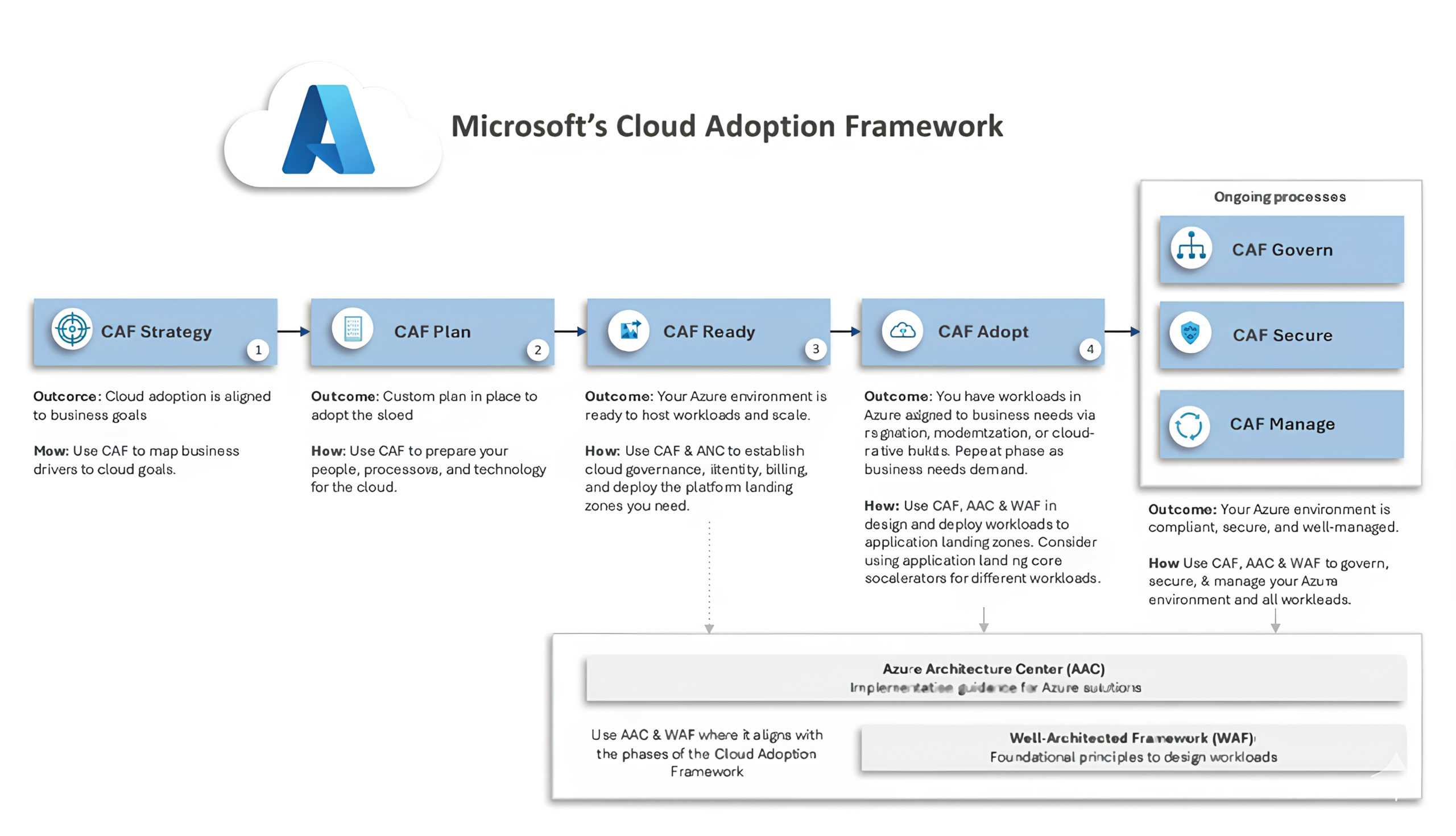
Transitioning from a technical specialist with five years of hands-on experience to an Azure Cloud Solution Architect (CSA) requires a fundamental mindset shift. While technical engineering focuses on how to build specific workloads, a Cloud Solution Architect focuses on aligning technical strategy with organizational goals, establishing enterprise platform governance, and designing scalable environments.
The Microsoft Cloud Adoption Framework (CAF) is the ideal framework for this transition. While the Azure Architecture Center (AAC) and Well-Architected Framework (WAF) cover detailed workload design, CAF provides the macro-level roadmap for cloud strategy, operating models, platform readiness, and governance.
Step 1: Understand the Role of the Architect in CAF
In the Cloud Adoption Framework, lead architects bridge executive business intent and technical execution. Rather than looking at single services or isolated virtual machines, your primary responsibilities as a CSA within CAF involve:
-
- Translating business goals and drivers (such as datacenter modernization, cost efficiency, or agility) into technical platform strategies.
- Designing the overarching enterprise foundation (Azure Landing Zones).
- Establishing policy-driven governance and security guardrails that enable developer autonomy while maintaining organizational control.
Step 2: Master the Core CAF Methodologies
CAF organizes cloud adoption into clear, sequential phases divided between setting the foundation, defining operational standards, and onboarding workloads:
- Foundation & Direction (Strategy & Plan)
-
- CAF Strategy: Learn to define motivations, business objectives, and key performance indicators. As an architect, you will consult with business, financial, and security stakeholders to ensure technology decisions directly yield business outcomes.
- CAF Plan: Study how to evaluate organizational readiness and select an appropriate cloud operating model (such as centralized, shared management, or decentralized). You will also learn how to inventory existing IT estates and plan migration or modernization strategies (rehost, replatform, refactor, rearchitect, or rebuild).
- Environment Readiness (CAF Ready)
-
- Azure Landing Zones: This is a critical technical area for any Azure CSA. A landing zone is the multi-subscription environment built for governance, security, and scale.
- Platform vs. Workload Landing Zones: Learn to separate central platform services (identity, connectivity, central logging) from application-specific workload landing zones.
- Design Areas: Deep dive into the core environment design areas: Billing & Entra Tenant, Identity & Access Management (RBAC), Resource Organization (Management Group & Subscription hierarchy), Network Topology, Governance, Security, Management, and Platform Automation/DevOps.
- Infrastructure as Code (IaC): Gain proficiency in automated platform deployment using Bicep or Terraform via Azure Verified Modules (AVM) and IaC accelerators.
- Operational Standards (Govern, Secure, Manage)
-
- CAF Govern: Shift from manual change advisory boards to automated guardrails using Azure Policy and resource tagging strategies to enforce compliance across subscriptions.
- CAF Secure: Apply Zero Trust principles, security baselines, and central posture management with Microsoft Defender for Cloud across the entire estate.
- CAF Manage: Implement operational baselines using the RAMP model (Ready, Administer, Monitor, Protect) and shared operational responsibility models.
Step 3: Connect CAF with Workload Architecture (WAF & AAC)
A complete Cloud Solution Architect knows how CAF and WAF fit together:
-
- CAF (Platform Level): Sets up the enterprise platform, Landing Zone hierarchy, subscription vending, networking hub, and policy guardrails.
- WAF & AAC (Workload Level): Once the landing zone is ready, you design individual workloads inside workload landing zones using WAF pillars (Reliability, Security, Cost Optimization, Operational Excellence, and Performance Efficiency).
Step 4: Practical Action Plan to Begin
-
- Review the Landing Zone Conceptual Architecture: Start by analyzing how Management Groups, Subscriptions, and Azure Policies structure a scalable Azure environment.
- Practice IaC Deployments: Explore deploying a Platform Landing Zone using Bicep or Terraform accelerators to understand how platform controls are codified.
- Study Real-World Scenarios: Learn how CAF maps different journeys for greenfield startups (cloud-native apps) versus enterprise brownfield migrations (legacy datacenter transitions).